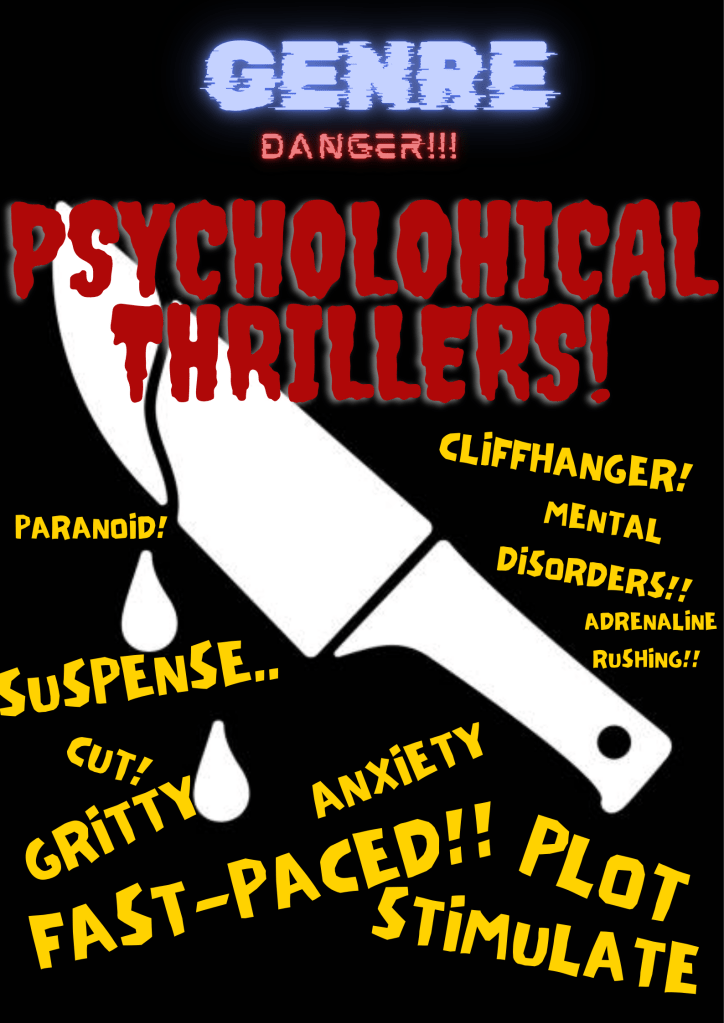
Psychological thrillers are a sub-genre which has mystery,suspense,crime and discover the psychology of character who are shown with problems.
Mise-en-scène:
Psychological thrillers generally have low-key lighting that depicts that something is off. Dull lighting creates a tense, suspenseful atmosphere for the audience to feel. For dark characters, their makeup, costumes, and room setting are in desaturated colors like black and grey to portray how cold and dry they are. Moreover, costumes represent a character’s personality; they also play a major role. As humans, we all have a fear of darkness, so it is a main necessity in thriller and horror films. To keep the audience hooked to the screen the antagonist is not revealed until the film is about to reach its end. The antagonist’s shadows are mostly shown to create suspense.
Editing:
In psychological thrillers, fast cutting is an essential editing technique as it creates tension. Another technique is flashbacks which tells audiences what the character has suffered in the past. Slow motion technique is also used to create suspense in audiences.
Camera shots:
Commonly used shots are mid shots, close-up and extreme close-up. These shots are mostly used to portray body language,facial expressions like a scary face or emotions like fear and anger. Furthermore, long shot, behind the shoulder shot and point of view shot are also included to somehow portray suspense.
Sounds:
Diegetic sounds are used to create strangeness. Sounds used tend to create tense atmosphere. For example, sobbing, screaming, foot steps, banging, gun shot, whispering, breathing heavily,etc. During tense scenes fast paced music is used. Also, an owl’s howling or bats noise is used to create more fear.
 AZ Productions
Leave a comment